Didn’t ever expect I’d personally experience Soviet Union and Venezuelan style grocery stores.

Chaika 3 (on redscale film) – Queue by Jaroslav A. Polak is in the public domain (CC0 1.0). Lines like this outside a grocery store were normative in the Soviet Union.

In the Soviet Union and Venezuela, grocery shopping involved/involves listening for rumors of which store got a shipment overnight, standing in line for hours, looking at lots of empty shelves, and going to the store daily to see if what you need might actually be on the shelf today.

If you have been awake the last seven days, you know that is what grocery shopping looks like in the U.S. today.

The difference between the Evil Empire and the worker’s paradise of Venezuela on one hand and the United States on the other hand is that the supply chain in the U.S. is still stocking the shelves and in a week or two or three will have them filled up.

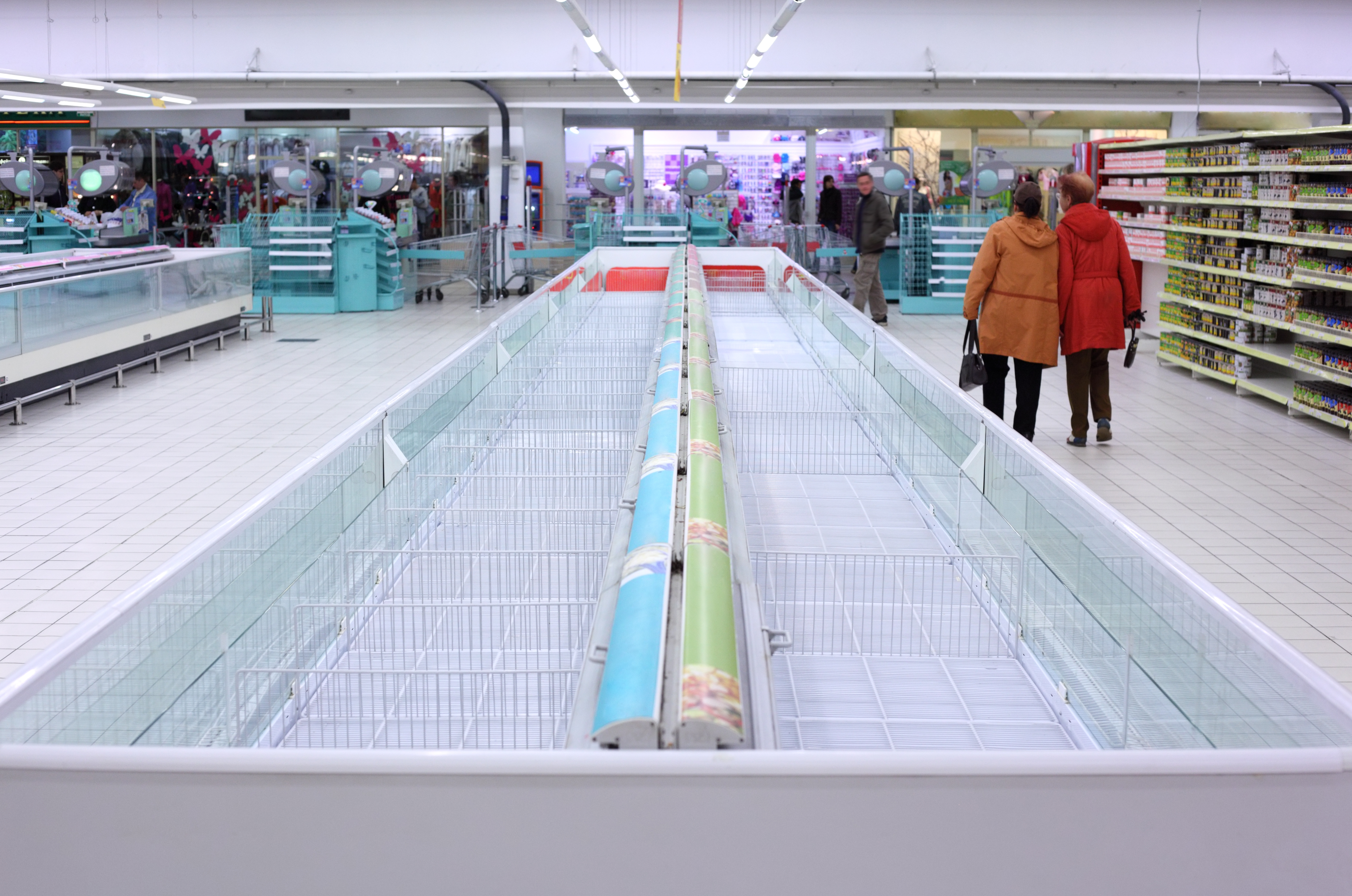
(more…)

Gettysburg Address.

A tribute to the memory and legacy of Abraham Lincoln as we remember his birth on February 12, 1809. The Gettysburg Address, presented at the Lincoln Memorial Shrine in Redlands, California on February 8, 2020. [youtube=https://youtu.be/4BYT8bVMSD4]    

The 2010’s: best decade in history.

Image courtesy of Adobe Stock.

Matt Ridley explains the best improvement in living standards for us humans over a single decade is the decade that ends today, 12/31/19.

He explained his point from multiple directions on 12/21/19 in Spectator: We’ve just had the best decade in human history. Seriously.

A few of his points that caught my interest:

The rate of extreme poverty in the world has dropped from 60% when he was born to under 10% in this decade. If you ache to seek less people in dirt eating poverty that is a wonderful thing.

(more…)

Yet another consequence of central planning: systemic sexism

Empty store shelves. Image courtesy of Adobe Stock.

Central planning is one of the major features of socialism. A major consequence of central planning is shortages. The widespread shortages are even more severe in the purest variation of central planning: communism.

Chelsea Follett points out The Shocking Sexism of Central Planning in Human Progress back on 12/6/17. She reports on a book How We Survived Communism and Even Laughed which explains that central planners in the Soviet Union placed low priority on many products that women needed.

Oh, Frederick Engels considered housework unmanly, so the burden of no washing machine, dryers, or other time saving devices fell on women. Severe shortages of makeup, hair dye, and even sanitary napkins (yes, you read that right, basic hygiene was not a production priority in the worker’s paradise) made for a harsh life for women.

(more…)

Life in Europe before the Industrial Revolution was dirty and disease-ridden.

Back in the 1820s, the upper class in San Diego had nice furniture but still used chamber pots which had to be dumped in the morning, Photo by James Ulvog.

There is a myth that rural life in the medieval ages before the industrial revolution was, if not good, then at least okay. In fact life then was a battle for survival.

The romantic idea of a plentiful past is pure fantasy – Marian Tupy at CapX – 2/13/19

This series of posts by Marian Tupy was kicked off as a response to one writer who disagreed with the assertion that the portion of people living in abject poverty has declined radically starting about 200 years ago. That particular author gives away his worldview by using Marxist terms. Thus we know why he refuses to acknowledge the existence and cause of rapid increases in wealth over the last 200 years. What, oh what, could have possibly caused that change?

I won’t dive in the to the responses. I will however provide a few tidbits from this article for insight of the severity of poverty in the past.

Prior to the 19th century, most people wore clothes made of wool, which not only itched but was also hard to clean, which increased disease transmission.

Keep in mind that concept of germs did not exist and most people lived under the same roof with their livestock, both to prevent theft and for mutual warmth. The animal droppings were used for fertilizer. All of that shot mortality rates skyhigh.

(more…)